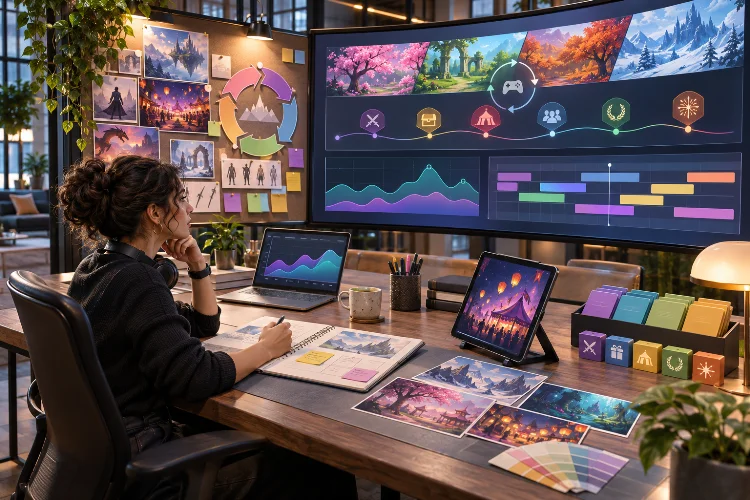
A successful game launch is exciting, but keeping that game alive for years is a completely different challenge. Players expect new experiences, developers face limited resources, and competitors constantly introduce fresh content.
Without a clear strategy, even popular titles can slowly lose momentum.
That’s where Advanced LiveOps Planning becomes essential. It helps gaming teams organize updates, manage seasonal events, understand player behavior, and maintain engagement without exhausting their development resources.
Instead of treating every update as an isolated project, studios can build a connected operational strategy that supports consistent growth and long-term player satisfaction.
1. Build LiveOps Around Long-Term Product Goals
Running a live game involves more than releasing new content whenever engagement drops. Every update should contribute to the product’s broader direction.
Some games need stronger player retention, while others need better progression systems or more meaningful social interactions.
Connect Daily Operations With Strategic Outcomes
Imagine a multiplayer strategy game where experienced players remain active but newcomers leave after their first week.
Adding high-level competitive tournaments might satisfy existing players, but it won’t necessarily solve early abandonment.
A better approach would involve improving onboarding, progression rewards, and beginner-friendly events.
Gaming teams should connect each LiveOps initiative to measurable goals such as Day 7 retention, returning users, or event participation.
This keeps operational decisions focused on genuine player needs instead of short-term excitement.
2. Design a Multi-Layered Content Calendar
A predictable content schedule gives players reasons to return while helping developers manage production workloads.
However, repeating similar events every week can make a game feel mechanical rather than exciting.
Advanced planning requires several overlapping content cycles.
Balance Weekly Events With Seasonal Experiences
Weekly challenges can provide smaller engagement opportunities, while monthly events introduce fresh objectives and rewards.
Larger seasonal campaigns might connect multiple activities through a shared storyline or progression system.
For example, a fantasy RPG could introduce weekly dungeon missions that contribute toward a three-month kingdom restoration event.
This creates continuity between individual activities without requiring entirely new gameplay systems.
A well-designed content calender should also include preparation periods, testing windows, and recovery time between major releases.
Those quieter periods give players space to enjoy existing content without feeling constant pressure.
3. Create Sustainable Content Production Systems
One of the biggest challenges in long-running games is producing enough content without overwhelming the development team.
Building every event from scratch requires significant design, engineering, artwork, and testing resources.
Over time, that approach becomes increasingly expensive.
Invest in Reusable Event Frameworks
A flexible event framework can support different themes, objectives, reward structures, and difficulty settings.
For example, one tournament system might support competitive rankings, cooperative challenges, and faction-based competitions through configurable rules.
Unity’s LiveOps documentation describes services such as Remote Config, Cloud Content Delivery, and automated triggers that help teams manage experiences after launch.
These capabilities can support quicker iteration when implemented with suitable technical foundations.
Reusable systems allow developers to focus more energy on creative improvements rather than rebuilding familiar functionality.
The goal is not to eliminate originality but to make content production more efficiant.
4. Adapt LiveOps Strategies to Different Player Groups
Not every player interacts with a game in the same way.
New players may want accessible rewards, while experienced players often seek challenging activities and meaningful progression.
Treating everyone identically can create frustrating experiences.
Segment Players Based on Actual Behavior
A studio can organize audiences using engagement frequency, progression level, recent activity, and participation history.
Unity Analytics supports audience segmentation based on player behavior, including groups such as recently active and disengaged players.
These segments can inform more relevant LiveOps campaigns.
For instance, returning players might receive catch-up missions, while dedicated veterans gain access to advanced challenges.
However, personalization should avoid making different groups feel unfairly treated.
Transparent rewards and accessible activities help preserve trust while improving the relevance of seasonal content.
5. Coordinate LiveOps With Development and Support Teams
An ambitious event roadmap means little when departments cannot deliver it reliably.
Designers, engineers, analysts, community managers, and customer support teams all contribute to successful live operations.
Poor coordiantion can create delayed updates, confusing announcements, or technical problems during important events.
Establish Clear Operational Responsibilities
Before launching a major event, each department should understand its responsibilities and deadlines.
Developers need enough time for technical testing, while community managers need accurate information about event mechanics and rewards.
Support teams should also prepare for common questions and potential complaints.
A shared release checklist can cover configuration reviews, server capacity, localization, accessibility, communication, and rollback procedures.
This reduces the possibility of last-minute surprises and helps studios provide a more dependable experience.
6. Balance Player Engagement With Monetization
Live games need financial sustainability, but aggressive monetization can damage long-term player relationships.
Frequent limited-time offers, excessive notifications, and restrictive progression systems may increase short-term spending while reducing enjoyment.
Advanced LiveOps strategies should balance commercial objectives with player satisfaction.
Design Rewards That Feel Worthwhile
Consider a seasonal event offering cosmetic rewards, premium bundles, and free progression milestones.
Players should understand what they can earn and how much participation is required.
Paid options can provide additional customization or convenience without making essential gameplay unfair.
Studios should examine purchase conversion alongside retention, event completion, and player feedback.
When commercial performance improves but satisfaction declines, leaders need to investigate whether the trade-off is sustainable.
Long-term trust is an important part of a healthy live-service business.
7. Continuously Measure and Improve LiveOps Performance
A successful event doesn’t automatically prove that the entire strategy is working.
Teams need to understand whether engagement improvements continue after the campaign ends.
That requires evaluating both immediate participation and longer-term player behavior.
Turn Event Results Into Future Decisions
GameAnalytics supports retention analysis based on specific player actions, including feature interactions and progression events.
A studio could compare return rates among event participants while accounting for differences between player groups.
For illustration, an event might achieve 45% participation but produce little improvement in subsequent engagement.
That result suggests the activity attracted attention without creating lasting value.
Teams should review participation, retention, sentiment, and operating costs together.
Documenting these lessons makes future planning more consistant and prevents repeated mistakes.
Advanced LiveOps Planning helps gaming studios turn occasional content updates into sustainable long-term engagement strategies.
By combining strategic goals, reusable systems, audience segmentation, and coordinated operations, teams can support their games without overwhelming developers or players.
Start by reviewing your current event roadmap, identifying unnecessary production costs, and building a more flexible LiveOps strategy that keeps your gaming community engaged for years.